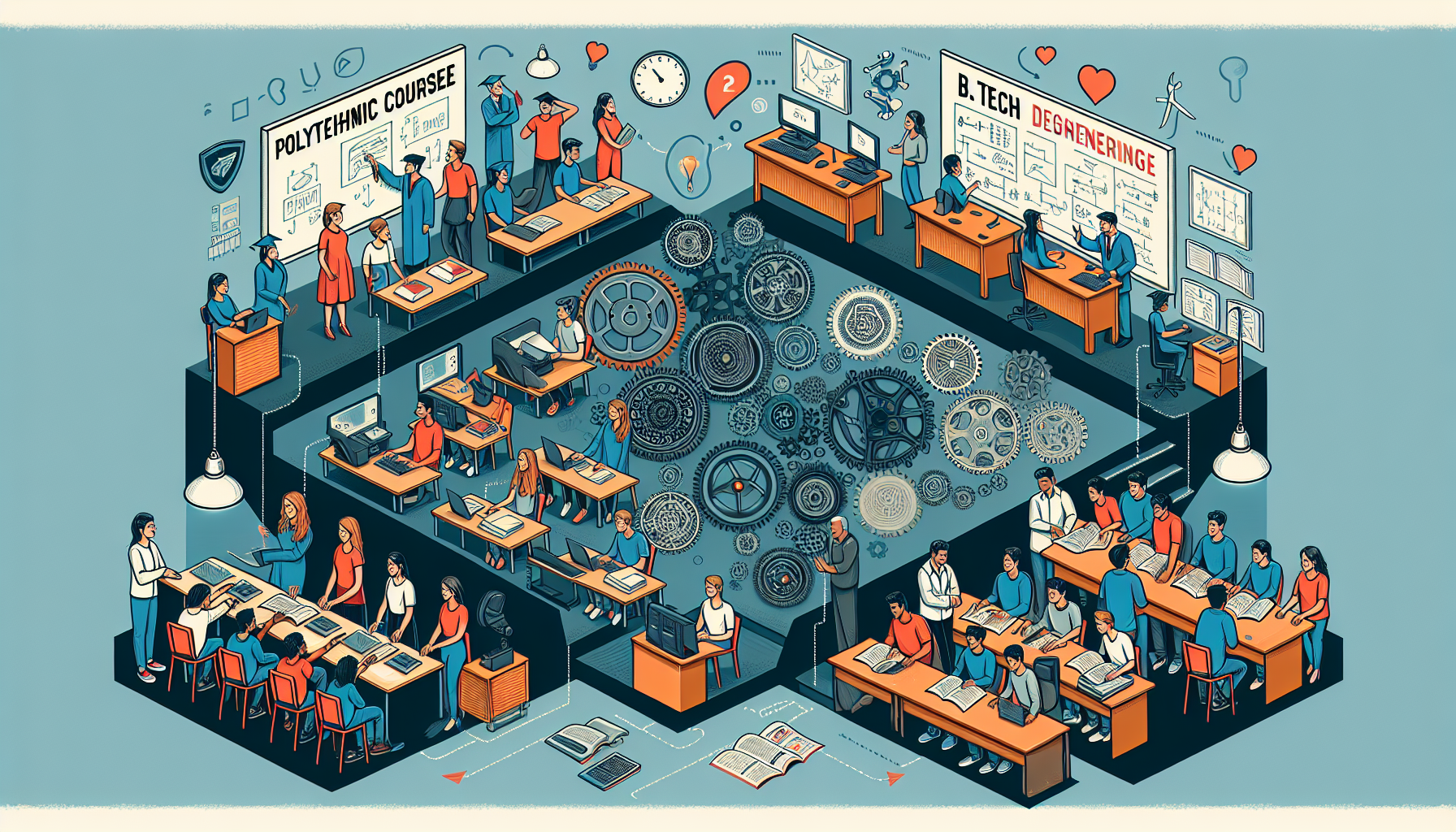
When it comes to higher education, students often find themselves choosing between Polytechnic and BTech courses. Both offer unique learning experiences and career opportunities, but the decision can be daunting. In this blog, we’ll explore the key differences between these two educational paths, including eligibility requirements, course structures, and career prospects, helping you make an informed decision about your future.
Table of Contents
- 👩🎓 Introduction
- 🎓 BTech 4-Year Degree Program
- 🎓 Pursuing Polytechnic after 12th
- Choosing Between Polytechnic vs BTech
- 📚 Polytechnic: Not Just Practical
- 📜 FAQ: Polytechnic vs BTech
👩🎓 Introduction
Choosing between Polytechnic and BTech is a critical decision that influences both your academic and career trajectory. Understanding the differences between these two paths is crucial in making an informed choice. Let’s break down their respective structures, focus areas, and career implications to help you decide.
🎓 BTech 4-Year Degree Program
The Bachelor of Technology (BTech) is a 4-year undergraduate degree focusing on engineering and technology disciplines like computer science, civil engineering, and electronics. It blends theoretical knowledge with practical skills and is widely regarded as a prestigious qualification for aspiring engineers.
Lateral Entry into BTech
A unique feature of BTech is the lateral entry option. Polytechnic diploma holders can directly enter the second year of a BTech program. This flexibility allows students to advance their technical education after gaining a diploma, saving time and effort.
For more details about BTech lateral entry requirements, visit the All India Council for Technical Education (AICTE) or your chosen institution’s official website, such as the Indian Institutes of Technology (IIT) Council.
Practical Orientation in BTech
While BTech programs provide both theoretical and practical knowledge, they place significant emphasis on industry-relevant projects, internships, and research opportunities. This makes it ideal for students looking to balance hands-on learning with academic rigor.
🎓 Pursuing Polytechnic after 12th
Polytechnic courses are ideal for students who want to dive straight into the technical workforce. These 3-year diploma programs emphasize practical, hands-on skills, making them a fast track to employment in industries like civil engineering, electronics, and manufacturing.
For students who have completed their 12th grade, Polytechnic offers a quicker route to industry employment, though it does not offer a degree. Students can later pursue a BTech degree through lateral entry, but it requires additional study.
For more information, check your state’s technical education website, such as the Directorate of Technical Education, Maharashtra.
Choosing Between Polytechnic vs BTech
When deciding between Polytechnic and BTech, consider your career goals, the time you want to invest in education, and your learning style.
- Polytechnic: Offers a quicker entry into the workforce with practical skills but provides limited opportunities for higher education and senior roles.
- BTech: Offers broader career prospects in engineering, management, and R&D, making it suitable for students looking for long-term growth.
📚 Polytechnic: Not Just Practical
It’s a common misconception that Polytechnic courses focus solely on practical learning. In reality, Polytechnic programs also cover theoretical knowledge, especially in areas like math, physics, and technical sciences. Here’s how Polytechnic compares to BTech in terms of curriculum:
Comprehensive Curriculum
Polytechnic courses offer a mix of academic subjects and technical skills. They may not be as academically intense as BTech, but they provide a strong foundation for students entering technical fields.
Diverse Learning Opportunities
A Polytechnic diploma exposes students to varied industries and offers opportunities in sectors such as manufacturing, construction, electronics, and IT.
To learn more about Polytechnic opportunities, check the National Career Service (NCS), provided by the Ministry of Labour and Employment.
FAQ: Polytechnic vs BTech
Can I pursue a BTech degree after completing Polytechnic?
Yes! Many students who complete a Polytechnic diploma pursue BTech through lateral entry into the second year of a BTech program.
What are the career prospects after Polytechnic?
Polytechnic graduates can work in roles such as:
- Junior Engineer
- Technician
- CAD Designer
They are highly employable due to their practical skills. For more information on career opportunities after Polytechnic, visit Employment News for government job listings.
How do I decide between Polytechnic and BTech?
Your decision should be based on your career goals. If you’re looking for a fast track to technical jobs, Polytechnic may be the right choice. However, if you aim for higher-level roles in engineering, management, or want to pursue research, BTech would offer better long-term prospects.
Government Initiatives for Polytechnic and BTech Students
Both Polytechnic and BTech students can take advantage of various government initiatives aimed at enhancing employability and skills development:
- Pradhan Mantri Kaushal Vikas Yojana (PMKVY): Provides free skill development courses for Polytechnic graduates in sectors like IT, manufacturing, and more.
- Skill India: Promotes skill development and entrepreneurship for both Polytechnic and BTech graduates.
- Scholarships for Technical Education: AICTE offers several scholarships for meritorious students pursuing Polytechnic and BTech courses.
Still Confused? Get Expert Career Guidance from Dheya
Choosing between Polytechnic and BTech can be a life-changing decision, and it’s essential to make the right choice for your future. If you’re unsure about which path is best for you, reach out to Dheya Career Mentors for expert career guidance. Our experienced mentors will help you understand your strengths, align them with the right educational path, and provide support throughout the decision-making process.
Visit Dheya Career Mentors for personalized counseling that can set you on the right path toward achieving your career goals.