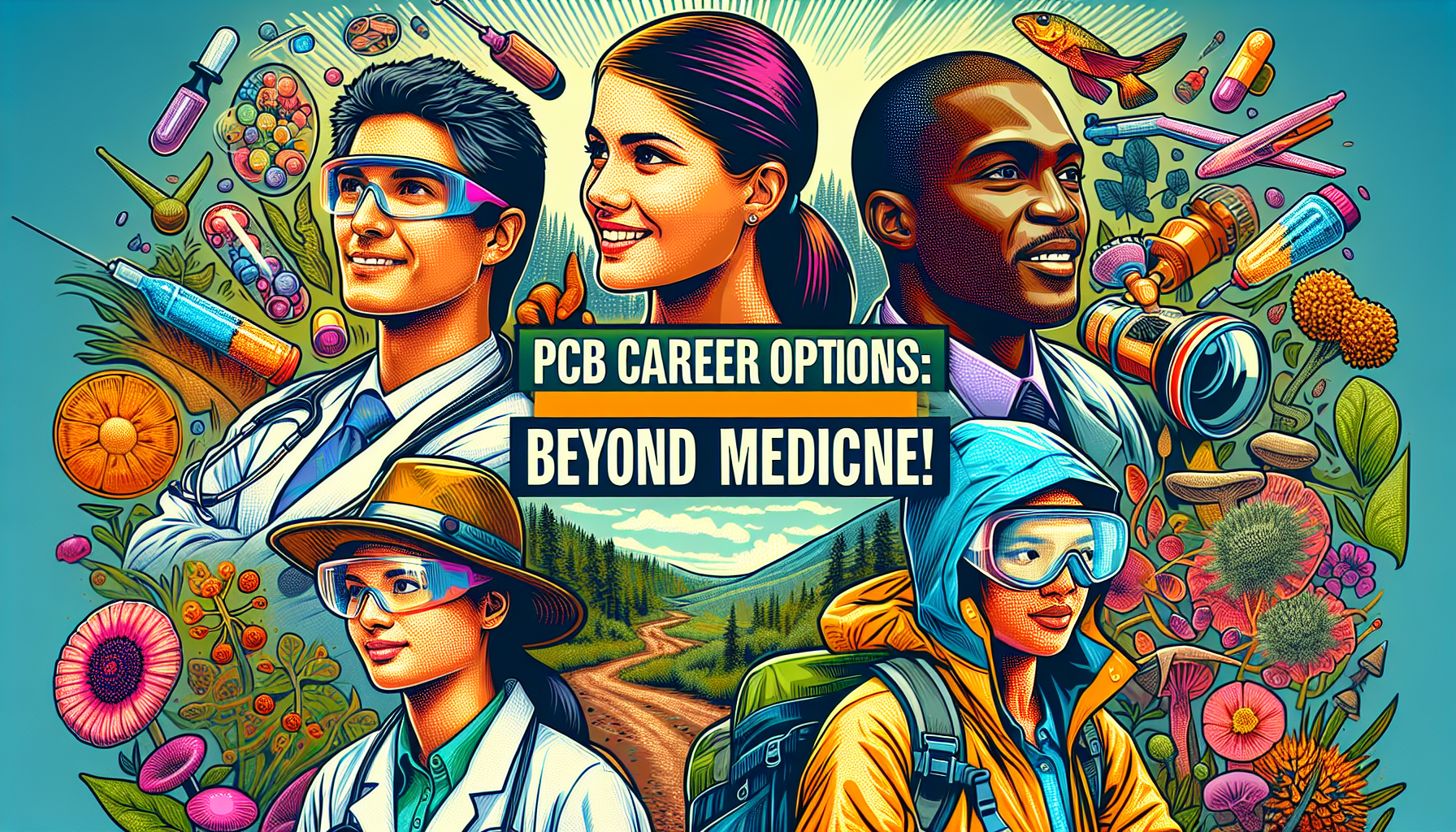
For Indian students with a PCB (Physics, Chemistry, Biology) combination, the world of PCB career options goes far beyond traditional medical pathways. While many students pursue medicine due to its popularity, it’s essential to explore the diverse and innovative career options that align with a PCB background. In this blog, we will share 20 exciting PCB career options that not only offer lucrative opportunities but also allow students to make significant contributions across various fields. If you are unsure about your career path, remember that professional career guidance services can provide valuable insights tailored to your interests and strengths.
The Importance of Diversifying PCB Career Choices
In today’s rapidly evolving job market, relying solely on traditional PCB career options can limit opportunities and personal growth. The landscape of careers for PCB students is changing, with an increasing demand for professionals in various fields, including environmental science, biotechnology, and data analysis.
As Aditi Sharma, a career counselor at Dheya, emphasizes, “The PCB combination equips students with a strong foundation in scientific principles, making them ideal candidates for many innovative fields beyond medicine.”
Exploring these non-medical PCB career options fosters creativity and innovation while allowing students to contribute to societal needs, whether in health, technology, or environmental sustainability.
Top 20 PCB Career Options
1. Medicine and Surgery
Overview: Medical careers, such as becoming a doctor or surgeon, offer great fulfillment and the opportunity to positively impact people’s lives. A career in medicine requires a solid foundation in PCB subjects and a willingness to engage in lifelong learning.
Example: Dr. Priya Mehta, a successful surgeon, attributes her journey to her passion for helping others. She states, “Every day is a new challenge in medicine, and that’s what keeps me motivated.”
2. Pharmaceutical Science
Overview: In the pharmaceutical industry, PCB students can participate in the development of new drugs, conduct research, or work in regulatory affairs. This field is crucial for scientific exploration and advances in healthcare.
Example: Graduates may work at companies like Sun Pharmaceutical Industries or Cipla, contributing to drug formulation and clinical trials.
3. Biotechnology
Overview: Biotechnology combines biology and technology to develop innovative solutions for various industries, including healthcare, agriculture, and environmental protection.
Example: A role in genetic engineering allows you to work on advancements in gene editing technologies like CRISPR.
4. Genetics and Genomics
Overview: Specializing in genetics and genomics, PCB students can conduct research and analyze DNA, contributing to personalized medicine and genetic counseling.
Example: Professionals in this field work with organizations like the National Institute of Genomic Medicine, analyzing genetic data for disease prevention.
5. Medical Research
Overview: Medical research encompasses several disciplines, including biomedical sciences and epidemiology. PCB students may pursue careers in research institutions, universities, or pharmaceutical companies, contributing to scientific discoveries.
Example: Research on cancer treatments at institutions like Tata Memorial Hospital showcases the impact of this career path.
6. Nutrition and Dietetics
Overview: Students passionate about promoting health can specialize in nutritional sciences, work as dietitians, or contribute to public health initiatives.
Example: Dietitians in clinical settings help patients manage chronic diseases through tailored nutrition plans.
7. Environmental Science
Overview: PCB students can address environmental issues through a career in environmental science, focusing on pollution control, conservation, and sustainable development.
Example: Graduates may work with organizations like the Central Pollution Control Board, ensuring compliance with environmental regulations.
8. Microbiology
Overview: Microbiology focuses on microorganisms and their impact on health and industry. PCB students can pursue careers in researching infectious diseases and vaccine development.
Example: Careers in laboratories analyzing pathogens are crucial for public health.
9. Bioinformatics
Overview: Combining biology, computer science, and data analysis, bioinformatics allows PCB students to contribute to genomics and computational biology research.
Example: Bioinformaticians analyze large datasets from genomic studies to identify disease-related genes.
10. Veterinary Science
Overview: A career in veterinary science enables PCB students to work with animals, preventing and treating diseases.
Example: Veterinarians working in wildlife conservation can make a significant impact on endangered species.
11. Forensic Science
Overview: With a foundation in biology and chemistry, PCB students can work in forensic labs, analyzing evidence and contributing to criminal investigations.
Example: Careers in forensic biology involve DNA analysis, playing a vital role in solving crimes.
12. Biomedical Engineering
Overview: This field focuses on developing medical devices and health technologies. PCB students can contribute to advancements in biomaterials and rehabilitation technology.
Example: Biomedical engineers may work with companies developing prosthetics or diagnostic equipment.
13. Pharmacology
Overview: Pharmacology studies the effects of drugs on the body and involves the development of safe and effective medications.
Example: Pharmacologists work with research organizations to develop innovative therapies for various diseases.
14. Environmental Health
Overview: This career combines public health, toxicology, and environmental science. PCB students can assess and mitigate health risks associated with environmental factors.
Example: Environmental health specialists evaluate the impact of pollutants on community health.
15. Neuroscience
Overview: Neuroscience deals with the brain and nervous system, offering careers in research, neurology, and neuroimaging.
Example: Neurobiologists may study brain disorders, contributing to the development of new therapies.
16. Marine Biology
Overview: For students passionate about marine life, marine biology offers opportunities to study and conserve marine ecosystems.
Example: Marine biologists working in conservation organizations help protect biodiversity in oceans.
17. Immunology
Overview: Immunology focuses on the immune system and its role in disease. PCB students can specialize in research and diagnostics.
Example: Immunologists play a crucial role in vaccine development and public health initiatives.
18. Toxicology
Overview: Toxicology studies the effects of chemicals and toxins. PCB students can work in research and regulatory agencies ensuring public safety.
Example: Toxicologists assess the safety of products ranging from cosmetics to food additives.
19. Public Health
Overview: PCB students can promote public health and prevent disease through careers in epidemiology and health policy.
Example: Public health officials work with governments and NGOs to implement health programs.
20. Stem Cell Research
Overview: Stem cell research offers promising opportunities in regenerative medicine. PCB students can contribute to advancements in therapy and tissue engineering.
Example: Professionals in this field may work with organizations developing treatments for conditions like spinal cord injuries.
Essential Skills for PCB Careers
Success in these PCB career options requires a diverse set of skills, including:
- Analytical Thinking: Ability to evaluate data and research findings critically.
- Research Skills: Proficiency in conducting experiments and analyzing results.
- Communication: Effective communication is essential for collaborating with teams and presenting findings.
Internships and practical experience are crucial for skill development. Engaging in volunteer work, summer internships, or research projects can provide hands-on experience, enhancing employability.
How to Choose the Right PCB Career Path
Choosing the right career can be daunting. Here are some actionable tips for navigating PCB career options:
- Assess Your Interests: Reflect on subjects you enjoy and activities that excite you.
- Explore Internships: Gain practical experience in fields of interest to see what resonates with you.
- Seek Mentorship: Connect with professionals in your desired fields to gain insights and advice.
If you’re still unsure about your career path, consider reaching out to professional career guidance services like Dheya. They offer personalized assessments and mentorship to help you navigate your options effectively.
FAQs: PCB Career Options
- What are the top PCB career options available?
- Top PCB career options include medicine, pharmaceutical science, biotechnology, environmental science, and more.
- Are there good career opportunities outside of medicine for PCB students?
- Yes, there are numerous opportunities in research, environmental conservation, biotechnology, and public health.
- How can PCB students find their ideal career path?
- Students can explore their interests, seek internships, and connect with mentors to gain clarity on their career choices.
- Is there any professional help available for career guidance?
- Yes, services like Dheya offer personalized career guidance and mentorship for PCB students.
- What skills are important for careers related to PCB?
- Key skills include analytical thinking, research capabilities, and effective communication.
- How can I pursue a career in environmental science?
- Consider studying environmental science at the undergraduate level and seek internships or volunteer opportunities in conservation organizations.
Conclusion
For PCB students in India, the world of possibilities goes far beyond traditional medical fields. By exploring these 20 innovative PCB career options, students can leverage their background to make meaningful contributions in healthcare, environmental protection, research, and various interdisciplinary fields.
Encouraging exploration of emerging PCB career options can lead to exciting opportunities for personal and professional fulfillment. If you’re unsure about your path, don’t hesitate to connect with career guidance services like Dheya. Your ideal career awaits!